Earthquake Survival
Earthquake Survival
It’s not if it’s going to happen to you, but when
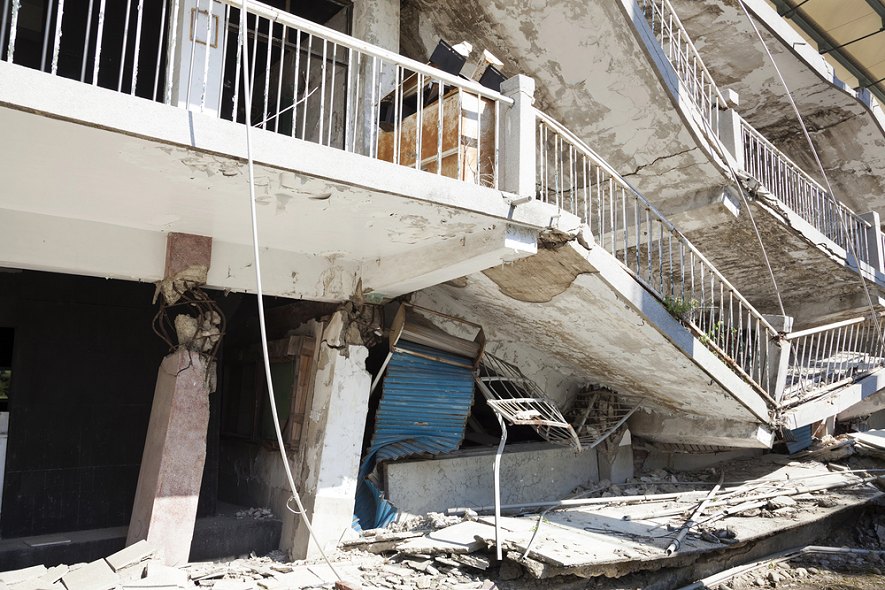 Ask anyone who lives near Salt Lake City, Utah. The city was awakened by a 5.7 magnitude earthquake on the morning of March 18th in 2020. Much like the COVID-19 Global Pandemic, this was something no one saw coming – but the Earth had other ideas. The Salt Lake Valley hadn’t had a sizable shake since 1962 and last week’s March 18th quake offered a rare opportunity to better map a virtually unknown fault line. But there is no better company than Survivalist Advisor ready to deal with such disasters and continue to deliver the finest earthquake kit and earthquake preparedness on the planet! What to do when it hits the myths are rampant about what your immediate actions should be when an earthquake hits:
Run outside
Get in a door frame
Get against a wall
Guess what? They’re ALL wrong.
If you find yourself outside, then try to get to a clearing. Risk of injury or death from getting hit by falling debris is greater than being crushed. Remember that safe distance away from a building is at least 1½ times the height of the building. Ideally, if you can get to a large parking lot or open park, you should be safe. Pay close attention not to stand under/near trees. In addition to falling debris, be aware of your surroundings, and be wary of the chance of a sinkhole forming. If you are in a vehicle, stop as soon as possible but stay in the vehicle. Again, try to stay clear of buildings, overpasses, highway on-off ramps and utility poles.
If you are in a garage or multi-level parking facility, get out of the vehicle immediately and crouch next to it. The roof of the vehicle won’t be able to withstand the weight of the collapsing concrete. If you are inside – stay inside. It is counterintuitive to remain in a building that may collapse on top of you during an earthquake. But again, the risk of injury or death from falling glass and debris is much greater if you try to exit once the tremor has begun. There are two methods for what to do when inside a structure during an earthquake.
- DROP, COVER, AND HOLD ON. Find a sturdy table or piece of furniture and get under it. Cover your head with your arms and hold on. This is recommended for more developed countries because of improved construction/safety requirements of structures. But remember: If man made it, Mother Nature can destroy it in a heartbeat.
- TRIANGLE OF LIFE. Another method is to get a sturdy piece of furniture so that if a wall falls, it will create a crawl or void in which you can survive.
Stay put until the shaking has stopped. This will rarely last longer than a minute, but it may feel like an eternity. I’ll have to admit that when I was in Palm Springs, I experienced my first of several earthquakes. And I did what any earthquake rookie would do: I ran outside. So, I’m talking to my neighbor for a couple of minutes, reflecting on the experience, before I realize I’m almost naked. Let’s just say that situational awareness ran a little thin in those years. She didn’t seem to mind. BURIED Imagine this: You have survived the quake… but are buried in rubble.
- Try to cover your nose and mouth with a cloth of some type. There will be a ton of dust and particles, and you want to protect your airway.
- Call out to let someone know you are there, but don’t waste too much time or energy doing this.
- If you can move, look for light and SLOWLY crawl toward it. As you are crawling, make sure you only move items in front of you that are non-weight bearing or easily moved. If you try to move a weight-bearing item like a 2×4, it may cause the small area you are in to collapse.
- If you can’t move, again don’t waste too much of your energy yelling. The best thing to do is find something you can tap or bang on. The vibrations from this will travel much farther than your voice. Continue doing so until help arrives.
“If trapped – tap.” What next? If a major earthquake strikes, it could be 3-5 days before you see any help. First responders are going to be totally overwhelmed and it will be up to you to do what you can to help.
Hopefully, you have an Earthquake Bug out Bag or kit ready. Step up! I must continuously remind myself when I see the general lack of courage in these situations that I have spent most of my life surrounded by excellence. I have been spoiled by a high standard that is so rare by a group of guys, I trust with my life. The type of people who race into danger. That said, you don’t have to be a SEAL to have the courage to do the right thing and help those in need. You may be safe, but there will be people out there fighting for their lives. The clock is ticking, and you have a duty to aid. Gather as many people as you can.
This is a clear-cut case of strength in numbers and your mission is to save lives. You must be in emergency disaster mode. Organize the group and tackle one challenge at a time. Don’t forget to do a continuous scene size-up. You are operating in a very hazardous and constantly changing environment. Situational awareness is paramount – DON’T ADD TO THE FATALITIES! Wear sturdy, closed-toed. If you have a helmet, put it on. It may seem stupid, but it will further protect you from fallen rubble, and other hazards. One of the first things you should do is turn off the gas and de-energize the electricity. This will reduce the risk of a fire, which is a major problem following most earthquakes.
You should be able to do both outside of your home. Search – Going in You should never try to re-enter a building after an earthquake unless a structural engineer approves it as safe to do so. Remember: Life over private property. Still, if you strongly believe someone is buried, then you must try to help.
- Ensure the gas and power have been secure (turned off).
- Never go in with less than a pair of rescuers.
- Establish a search pattern – start right and go counter-clockwise. If you have multiple search teams, have each start opposite to “meet in the middle.
- Use caution while moving through the structure, remembering NOT to move any weightbearing material. Watch your step… you could go right through the floor.
- When searching rooms, understand that you have 6 sides. The 4 walls, floor and ceiling.
- Be thorough! Do it right the first time. Someone could be wedged under a small space.
An especially important aspect of searches is door marking. This can be done with spray paint, magic markers, chalk, Crayon or even a bottle of mustard.
Before entering a room or building, make one diagonal line across the door. This will let anyone know that someone is inside searching.
If you don’t find anyone inside, place another diagonal line on the door to form an “X”.
At the top of the “X,” write the time and date. At the bottom of the “X,” place a “0”. This will let everyone know that the house has been searched and there is “0” – no one inside. They can move on to the next search and save valuable time.
Found someone – Extricating- More than likely you will find someone who is buried under quite a lot of weight. Much more weight than a couple of people will be able to move.
There are two things you can do to try to get them out.
- Lever – use a long 2×4 or 4×4 and place it under the rubble, then put another object under the lever a few feet back from the end. This will be your fulcrum. The longer the lever, the more weight it will lift.
- You can use what Search and Rescue call cribbing and shoring. This works best with a car jack. Place the jack on top of several pieces of wood to distribute the weight at the base. Place a similar piece of wood between the top of the jack and the object to be lifted. Slowly start jacking up the object to a height of about 4”. Place pieces of wood that form a box “cribbing” under the object you are lifting. This will keep it from dropping back down and thus “shore” it up. Then continue lifting the object another 4” and repeat the process until the object is high enough to pull the victim out.
Post-quake Don’t think that the danger is over because the earthquake stopped. Aftershocks have been known to continue for days following the first earthquake, some of which are just as strong as the first tremor. The building that was initially damaged may collapse from an aftershock. If you are on the move, remember that the landscape you may be used to is a vastly different environment post-quake with dangers you may not be able to see.
Avoid entering structures without approval.
Avoid bridges and on-ramps.
Watch out for downed power lines.
There may be several water main breaks, so remember this last tip: there are up to 50 gallons of drinkable water in your hot water heater.
The Emergency Earthquake Kit should include:
Water or emergency filtration kits
- Bottled water or a water filtration system is important. You will need at least three to five days’ worth of water. It is recommended that one gallon of water is consumed per person per day.
- The warmer the weather gets, the more fluids you must drink. There are several types of purification systems available for water. Water purification tablets that can be used to purify water.
Electric source power outages
- A generator with at least twice the capacity of the batteries should also be considered. All critical devices can be managed by this powerful platform.
- A solar panel with an adjustable kickstand ensures that solar power is maximized and that the panel is protected from the elements. The portable power station is designed to last for a long time.
Flashlights and Batteries
- A powerful LED flashlight that is rechargeable at any time and is part of your disaster kit. The flashlight should have a maximum irradiation distance of 4921 feet and can be reached with a brightness of 990,000 high lumens. An LED headlamp that is battery powered.
- It is recommended that all Hurricane gear and equipment be equipped with extra batteries.
NOAA Weather Radio
- The weather radio should be part of your blackout survival list. Updated with the latest weather information and evacuation information in case of an emergency. When you turn it on or when it is in standby mode, it automatically checks to see if there are any emergency alerts or weather alerts.
- Weather alerts from NOAA provide advance warning of impending severe weather, so you can prepare or evacuate. Make sure a solar device can be operated by hand crank or battery power.
Heat cooking source.
- An easy-to-use fire starter kit that can be used by families to start a fire for cooking or heating purposes.
- Waterproof and windproof matches are the best matches to use in starting a wood fire. Tanks that contain butane can be used for several types of stoves. Emergency cooking equipment can be used for cooking or for heating.
14 Days medication
- It is essential to provide a minimum of two weeks’ supply of medication for family members in your emergency kit.
- Having an emergency medical kit with enough supplies to last the duration of an emergency is especially important. It is important to be prepared for any emergency by having bandages, an antiseptic, scissors, a sewing kit, and gauze pads on hand.
Freeze Dried Food
Freeze Dried Meats (chicken, turkey, seafood)
- A survival kit that includes protein-rich foods for the entire family. In addition to building and repairing muscle tissue, amino acids function as enzymes, hormones, buffers, transporters, and regulators in the body.
- The average person needs five to twelve ounces of fluid and five ounces of meat or fish, or chicken or turkey stored in a five-ounce package per day.
Fruits and vegetables
- Must have a long shelf life and a low moisture content. Fruits and vegetables that have been freeze-dried can be reconstituted quickly and will retain their texture, color, shape, and taste once reconstituted.
- Approximately two and a half cups per day per person would be enough. Approximately 11.2 ounces or one and a third cups can be found in one can.
Peanut butter
- The amount provided should be sufficient to provide one ounce per person per day. In addition to providing energy and protein, it is also a reliable source of healthy fats. The jar of peanut butter can be eaten right out of the jar or spread on healthy crackers to serve as a snack. Ready to eat cereal, crackers, pretzels, instant oatmeal, or other non-perishable food.
- One cup of cereal per day per person.
Nuts, Seeds
- Enough to provide three cups a day per person. Easy to store, will keep fresh for an extended period.
Granola bars
- Which supply much-needed carbohydrates. Just make sure they do not contain much sugar. Enough to provide for each person per day
Whole grains
- Pasta is high in carbohydrates and can be used by a family in a variety of ways with different foods. Whole grain rice is another reliable source of carbs.
- Enough to provide for six ounces a day per person
Beans, Dried beans
- Will stay good for a long time. Lots of protein, especially for a non-meat source.
- Enough to provide two ½ cups per day per person
Powdered milk
- A reliable source of Vitamin D and calcium. It will supply some of your dairy needs. Powdered milk can also be used for baking.
- Enough to provide for each person per day.
Canned foods
- Survival foods that are heavy and require a lot of storage space. Check for items that contain elevated levels of sodium. Canned foods offer a wide variety, most of which are nutritious. They come in handy when you are hunkering down.
- Three ounces is enough to provide for each person per day.
Money
- In case of an emergency a home survival kit should include money, enough to last the entire duration. Ensure that you always have enough cash on hand in case of an emergency, either at home or with someone you can trust.
- A family’s cash should be kept in a secure location to prevent theft, loss, or destruction from happening.
Utensils
- As part of this emergency kit, you will find forks, spoons, knives, as well as a non-electric bottle opener. There are several tools in this set such as an ax, knife, shovel, and multipurpose tool. The pots, cups, and plates you need to cook with.
- A whistle, with a lanyard attached to it. An item that is used to charge a cell phone. A nylon rope equal to 60 feet. A roll of duct tape and an ink pen and a small notepad.
Personal items, Clothing Raingear, Shoes
- Clothing that is lightweight and compact is a go bag essential. A blanket, Ponchos, tents/shelters. Clothing such as sweatshirts and pants. Fast-drying fabrics or fabrics that are waterproof.
- Boots and shoes that are waterproof. Gloves and hats. An extra pair of socks and underwear.
- Personal hygiene items, such as toilet paper, wipes, soap, and toothbrushes
Important Documents, Insurance, credit cards, medical
- These go bag Documents such as social security cards, insurance cards, credit cards, and medical records are important.
- The following documents passports, driver’s licenses, personal identification cards should also be included.
Special needs for children, infants, pets
- Medications, food, clothing, and anything you might need.
- There are also stress-relieving reading materials, games, puzzles, and drawing pads available.